
Mobile homes for offices and sports clubs: a flexible solution for new spaces
- Redazione
- 13/10/2026
Lorem ipsum dolor sit amet
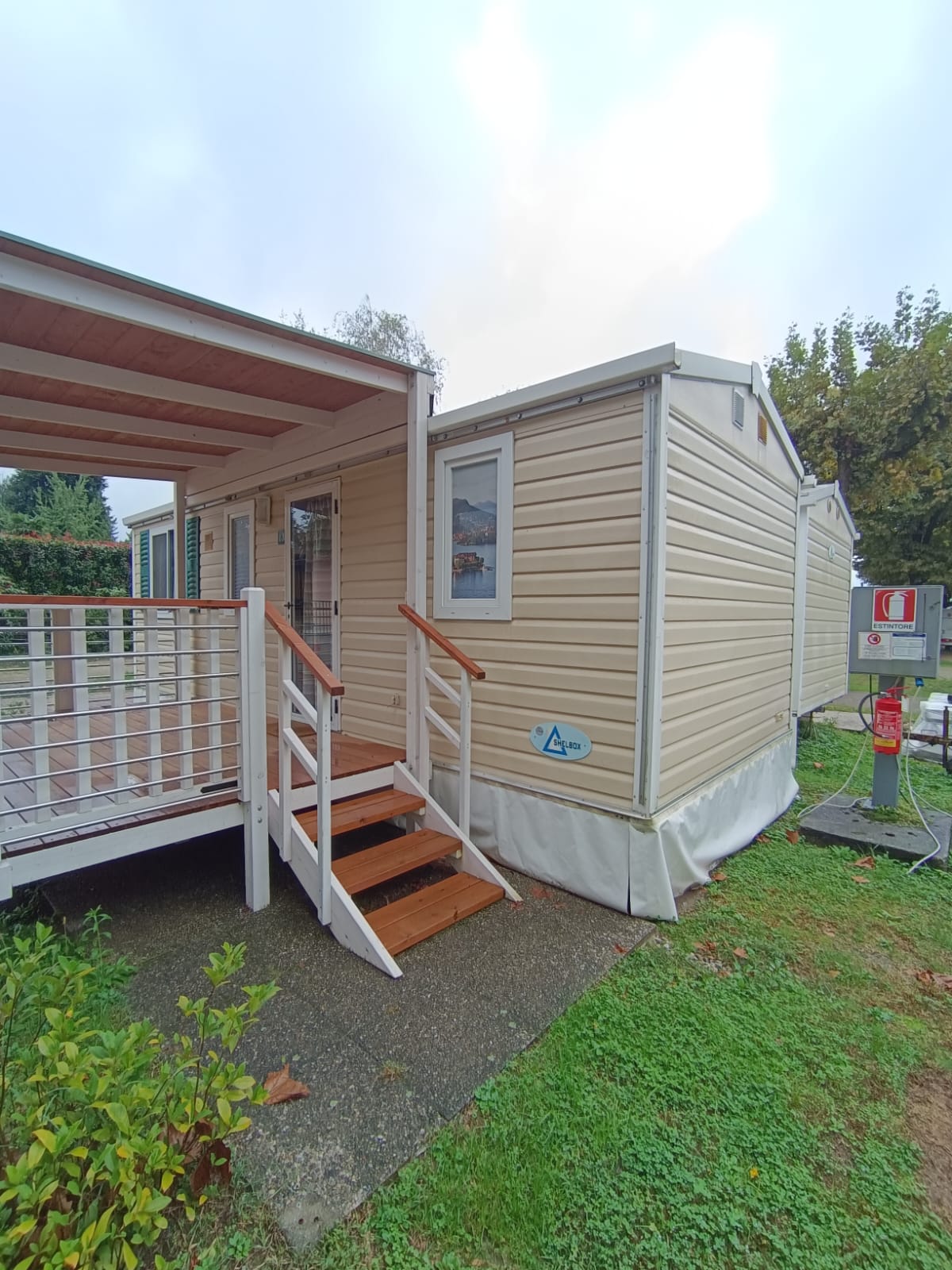
When people think of mobile homes, they usually associate them with tourism and holiday parks.
In reality, however, these structures can be used in many more ways.
With the right design, a mobile home can be turned into a functional space for a business, a headquarters for an association, a temporary office or a service facility within a sports complex.
For those looking to create additional space without necessarily taking on the construction of a traditional building, this can be an option worth considering thanks to its quick installation, flexibility and customisation options.
But when can a mobile home be used as an office? And why could it be an interesting option for a sports club?
A business may need additional space for a number of reasons: expanding its workforce, opening a new location, setting up an office within a production site or temporarily creating additional space while renovation work is underway.
In these situations, a mobile home designed for office use can be turned into a functional workplace, equipped with the systems and features required for its intended use.
For example, the space can be set up as:
One of the main advantages is the possibility of having a ready-to-use space without necessarily having to start from scratch with the construction of a traditional building.
This can be particularly useful when a business needs to increase its available floor space quickly, or when the purpose of the space may change over time.
The cost-effectiveness of a mobile home should not be assessed simply by comparing its price with that of a traditional building.
The real advantage may come from a combination of different factors.
Speed
A prefabricated structure can be prepared and customised before it is delivered and installed, reducing the amount of work that needs to be carried out directly on site.
For a business that needs to expand its operational space quickly, this can make managing the timeline easier compared with a traditional construction project.
Flexibility
An office may only be needed for a few months, for several years, or it may eventually become a long-term solution.
A mobile structure offers a more flexible way to address changing space requirements, particularly when it is difficult to predict exactly what a business will need in the future.
Customisation
A mobile home intended for professional use does not necessarily need to look or feel like a holiday home.
The interior can be designed around its intended purpose, with workstations, reception areas, toilets, technical rooms or shared spaces.
The layout should, of course, be defined according to the intended use, the characteristics of the site and the applicable requirements.
Expanding the available space
Another interesting option is the possibility of using multiple modules to create a larger floor area.
A single structure can be suitable for a small office, while several modules can be combined to create a more complex layout with different rooms and functions.
Another possible application can be found in the world of sport.
Sports clubs and amateur sports associations may need spaces that go beyond the pitch, court or gym itself.
Administrative offices, reception areas, changing rooms, toilets, meeting rooms and spaces for welcoming athletes and visitors can all play an important role in the day-to-day running of a sports facility.
In certain situations, a mobile home can be considered as a way of creating these additional spaces.
The idea is therefore not necessarily to use a mobile home as accommodation, but rather to adapt a prefabricated structure to a supporting function connected to sporting activities.
Requirements vary depending on the sport, the type of facility and the size of the organisation.
For example, a structure could be designed to accommodate:
For a sports club with outdoor space but insufficient permanent buildings, this can be a particularly interesting option.
For many sports clubs and associations, finding the right space is closely linked to the resources available.
Constructing a new building can require a significant investment, as well as planning, permitting and construction times that need to be assessed according to the individual project.
A prefabricated solution offers a different approach to managing space. Rather than necessarily building an entirely new property, it may be possible to install an existing structure and then customise it according to the organisation’s needs.
This can be useful, for example, when an association:
The advantage is therefore not simply about “building less”, but about having more flexibility when managing the investment required to create new spaces.
The sports sector can also involve changing space requirements over time.
A facility may undergo renovation work, a club may need additional space during a particular season, or a temporary reception or administrative office may be required.
In these situations, the flexibility of a mobile structure can be an important factor to consider.
Even in these cases, however, it is important to distinguish between the mobility of the structure and the absence of planning or building requirements.
Italian building regulations also apply to the installation of lightweight structures, prefabricated buildings and mobile homes used as accommodation, workplaces, storage areas or warehouses. Exceptions may depend, among other things, on whether the need is temporary and on the characteristics of the installation.
For this reason, before installing a mobile home as an office or as a space for a sports association, it is always necessary to check the planning and building regulations applicable to the site, as well as any permits or authorisations required by the local authority and other competent bodies.
There are also specific provisions concerning the premises used by amateur sports associations and clubs to carry out their statutory activities.
Article 7-bis of Legislative Decree 36/2021 establishes that the premises of amateur sports associations and clubs where their statutory activities are carried out, provided these are not production-related activities, are compatible with the homogeneous use categories provided for by the relevant legislation, regardless of the site’s planning designation.
This does not mean that a mobile home can simply be placed on any plot of land without further checks. The planning designation of the site, installation method, characteristics of the structure and local regulations must always be assessed on a case-by-case basis.
A mobile home should therefore be considered as part of a wider project and properly integrated into the context in which it will be used.
Cost-effectiveness depends on the individual project and cannot be determined through a standard price that applies to every situation.
A proper assessment should take into account at least the following:
Cost of the structure: dimensions, materials, interior layout and equipment all affect the final price.
Transport and installation: the distance involved and the characteristics of the site can affect logistics costs.
Utility connections: water, electricity, drainage and other systems need to be assessed according to the site.
Customisation: an office or sports facility may require a very different layout from a mobile home intended for accommodation.
Site preparation: ground preparation, access routes, foundations or other works may be required depending on the project and applicable regulations.
Planning, permits and design: these aspects should also be included in the overall budget.
The right comparison, therefore, is not simply between the price of a mobile home and that of a traditional building, but between two complete solutions, taking into account timescales, required works, construction costs, ongoing management and the ability to adapt the space over time.
Mobile homes can therefore also be considered as professional and service spaces, going well beyond their traditional use in the tourism sector.
For a business, they can become an office, reception area or operational space.
For a sports association, they can provide space for administration, reception, staff or services connected to sporting activities.
For a sports facility, they can be an option worth considering when additional spaces are needed without necessarily taking on a traditional construction project of comparable scope.
The right choice should always start with the specific requirements of the project, together with an assessment of its planning, building and utility requirements.
The possibility of using a mobile home as an office or for a sports association highlights just how versatile these structures can be.
Flexibility, shorter lead times, customisation and the ability to adapt the space to the user’s needs are some of the factors that can make this solution worth considering.
There is no one-size-fits-all mobile home, however. Dimensions, layout, equipment and technical specifications should all be defined according to the intended use.
If you’re considering a mobile home for an office, association or sports facility, starting with the specific requirements of your project is the best way to determine which configuration is right for you.
Discover the solutions available from 4Springs and explore the possibilities offered by mobile homes and homes on wheels for creating new spaces with greater flexibility.

© Copyright 4 Springs Case Mobili s.r.l. 2024
