
Verandas for mobile homes: which options to consider and what to know before buying
- Redazione
- 10/11/2026
Lorem ipsum dolor sit amet
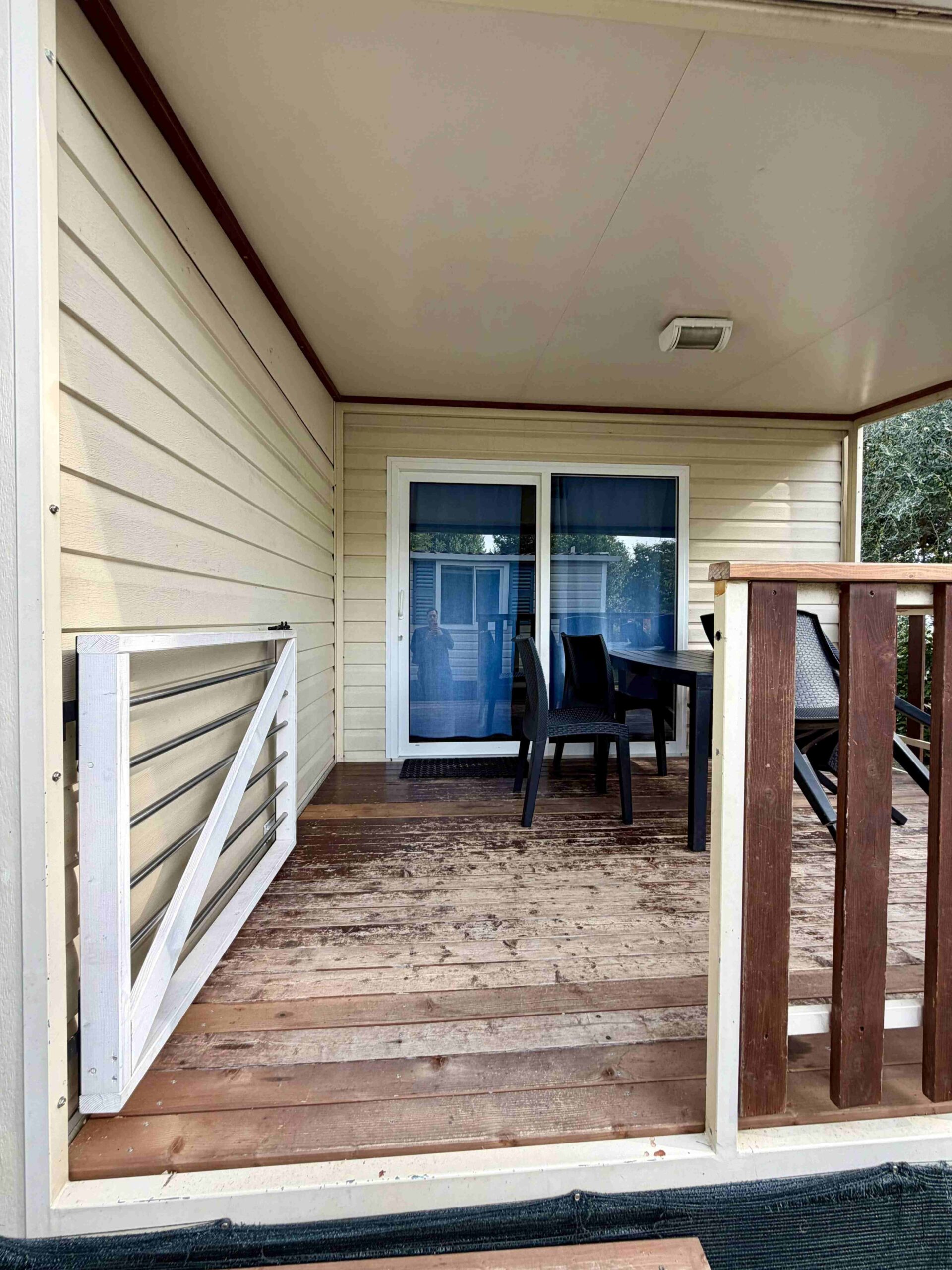
A veranda can significantly extend the living space of a mobile home, providing a sheltered outdoor area and making outdoor living more comfortable and practical. In the camping sector, several solutions are available, differing in terms of structure, materials, installation methods and transport options.
There are three main types to consider: aluminium and PVC verandas, verandas integrated into a trailer-mounted mobile home, and verandas attached to the mobile home. The latter are available either as kits to be assembled on site or as complete structures that can be transported by truck.
Understanding the features of each option is essential to choosing the one that best suits your needs. Dimensions and functionality are important, but so are costs, maintenance requirements and installation methods.
In the world of mobile homes designed for campsites, verandas can vary considerably. The main difference lies in how they are built and supplied with the accommodation: some are already included with the mobile home, others form part of its overall design, while others are purchased separately and added at a later stage.
An aluminium and PVC veranda, commonly referred to as a canvas-enclosed veranda, is one of the most widely used options for mobile homes in campsites.
It features a supporting aluminium frame and a PVC covering, with side panels that enclose the space and provide protection from the elements.
One important aspect to consider is whether it is included in the mobile home’s specifications. When a mobile home comes with this type of veranda, the structure is already included in the sale price.
The veranda is delivered in a packed form and placed inside the mobile home, allowing it to be transported together with the accommodation. It is then assembled on site by the customer.
This option provides a covered outdoor area without the need to purchase a separate veranda. Another advantage is that the structure is specifically intended for the mobile home model being purchased.
Before making a decision, however, it is important to check that the veranda is actually included in the mobile home’s specifications and to allow for enough space to assemble it once delivered.
An integrated veranda is a specific feature of double-module mobile homes, where the veranda is already included in the design and forms an integral part of the model.
Unlike structures that need to be purchased and built separately at a later stage, this type of veranda is designed alongside the mobile home and is included in its configuration.
One of its main advantages is financial: since it is already part of the model, there are no additional costs later on for purchasing and building a separate veranda on site.
Maintenance is another important benefit. This solution generally requires less maintenance than an external veranda added at a later stage, making it easier to manage over time.
An integrated veranda therefore allows you to purchase a mobile home with an outdoor area already included in its design, without having to arrange additional construction work in the future.
This is a feature worth considering, especially if you are looking for a complete accommodation solution in which both indoor and outdoor spaces are designed around your needs.
A third option is a veranda attached to the mobile home, which can be purchased separately and added to the accommodation.
There are two ways to supply this type of veranda: as a kit to be assembled directly on site, or as a complete, pre-built structure that can be transported by truck.
This option consists of supplying all the components needed to build the veranda directly where the mobile home will be installed.
The structure generally includes a wooden deck, which may be fitted with wooden or steel railings, wooden support posts and a roof available in different configurations.
There are three main roofing options:
Having different roofing options makes it possible to adapt the veranda to the surrounding environment and individual requirements.
Before purchasing, it is important to remember that this type of veranda must be built directly on site. You should therefore consider the available space, assembly requirements and any preparatory work needed before installation.
An alternative to an assembly kit is a complete veranda: a pre-built structure that can be transported by truck together with the mobile home.
This option means the veranda arrives already assembled, eliminating the need to build the entire structure at the destination.
The complete verandas offered by 4Springs can also be fitted with wheels at an additional cost. This makes them easier to move: they can be transported on the same truck as the mobile home and, once unloaded, can be towed into position.
This feature is particularly useful for anyone who needs to move both a mobile home and its veranda, as it allows the two structures to be included in a single transport arrangement.
The choice between an assembly kit and a complete veranda therefore also depends on installation requirements, available space and how the structure needs to be moved.
Once you have identified the type of veranda you are interested in, it is important to consider a few practical aspects before making a purchase. Your choice should take into account the characteristics of the mobile home, the available space and how you intend to use the outdoor area.
Consider the dimensions and available space
The first thing to consider is the size of the veranda and the actual space available around the mobile home.
The structure should be proportionate to the accommodation, while leaving enough room for access, walkways and any maintenance work that may be required.
Before purchasing, it is advisable to measure the area, check the position of doors and windows and consider the overall footprint of the veranda.
For structures that need to be built on site, you should also allow enough room for the deck and for assembling the various components.
Decide how you intend to use the veranda
Your choice will also depend on how you plan to use the outdoor space.
A veranda can become a dining area, a place to relax or an additional living space to enjoy during your stay at the campsite. Depending on its intended use, you will need to consider the dimensions, roofing and materials.
If you plan to use the space frequently, you may prefer a more substantial and stable structure. If, on the other hand, you are looking for a solution that is already included with the mobile home, you could consider models supplied with a canvas-enclosed or integrated veranda.
Choose the right roofing materials
The materials used affect the veranda’s durability, resistance and maintenance requirements.
For canvas-enclosed verandas, it is important to assess the quality of the PVC and the strength of the aluminium frame. For verandas built on site, the choice between wooden slats and roofing felt, insulated panels or PVC sheeting should take into account the local climate and how the space will be used.
Structural elements such as the deck, support posts and railings should also be assessed in terms of stability and long-term durability.
Take climate and exposure into account
The location of the mobile home also affects the type of veranda best suited to it.
In particularly sunny areas, it is important to consider how effectively the roof protects against direct sunlight.
In windy locations or areas with frequent rainfall, the stability of the structure, the quality of the fixings and the resistance of the materials become especially important.
If the mobile home is located in a mountain area or will be used during winter, you should also check its resistance to snow loads and the performance of the roofing.
Not all structures are designed to withstand the same weather conditions, so it is important to refer to the technical specifications and the manufacturer’s guidelines.
Check transport and installation requirements
Another factor not to overlook is logistics, particularly when purchasing a mobile home and veranda together.
With aluminium and PVC verandas, the structure is transported in a packed form inside the mobile home and assembled later by the customer.
Verandas supplied as kits, on the other hand, need to be assembled directly at the destination.
Complete verandas transported by truck offer a different solution: they can travel together with the mobile home and, if fitted with wheels, can be towed into position after unloading.
Checking these arrangements in advance helps you plan delivery and installation more effectively, avoiding unexpected issues and additional costs.
The cost of a mobile home veranda depends on the type of structure, its dimensions, the materials used and the way it is supplied and installed.
One of the first things to consider is the difference between verandas already included with the mobile home and those purchased separately.
When supplied as part of the mobile home, an aluminium and PVC veranda is already included in the sale price. The same applies to integrated verandas on double-module models, where the structure forms part of the overall configuration.
For attached verandas, the cost depends on the option selected: an assembly kit to be built on site or a complete structure that can be transported by truck.
To make a meaningful comparison, it is useful to consider:
Considering all these factors makes it easier to compare the available options, taking into account not only the initial purchase price but also any costs that may arise later.
Choosing between a mobile home with an integrated veranda and purchasing a separate structure depends on how you intend to use the space, the configuration of the accommodation and your available budget.
Buying a mobile home with a veranda included means having a complete solution from the outset.
This applies to mobile homes supplied with an aluminium and PVC veranda, which comes with the accommodation, as well as double-module models featuring a veranda integrated into the trailer-mounted structure.
These configurations eliminate the need for a separate purchase and, in the case of an integrated veranda, also avoid the need to build an external structure at a later stage.
If you already own a mobile home and want to add a veranda, you can consider the attached options, choosing between a kit to be assembled directly on site and a complete structure that can be transported by truck.
The latter may be particularly convenient if you want the mobile home and veranda to be delivered as part of a single transport arrangement.
Before making a decision, it is worth comparing the features of the different configurations and considering not only the purchase price, but also construction, transport and installation costs.
A veranda is an important feature when planning the outdoor space around a mobile home. Whether you choose an aluminium and PVC structure already included with the accommodation, a veranda integrated into a trailer-mounted model or an attached solution to be built on site or delivered as a complete structure, each option meets different needs.
Understanding the characteristics of the available alternatives makes it easier to choose the most suitable solution, taking into account functionality, costs, maintenance and installation requirements.
At 4Springs, you can explore a range of mobile homes, including models with verandas already included or integrated, as well as options for completing your accommodation according to your needs. Discover the available models and find the configuration that best suits your project.

© Copyright 4 Springs Case Mobili s.r.l. 2024
