
New rules for mobile homes, holiday parks and campsites from May 27, 2026: less bureaucracy, but only under specific conditions
- Redazione
- 25/06/2026
Lorem ipsum dolor sit amet
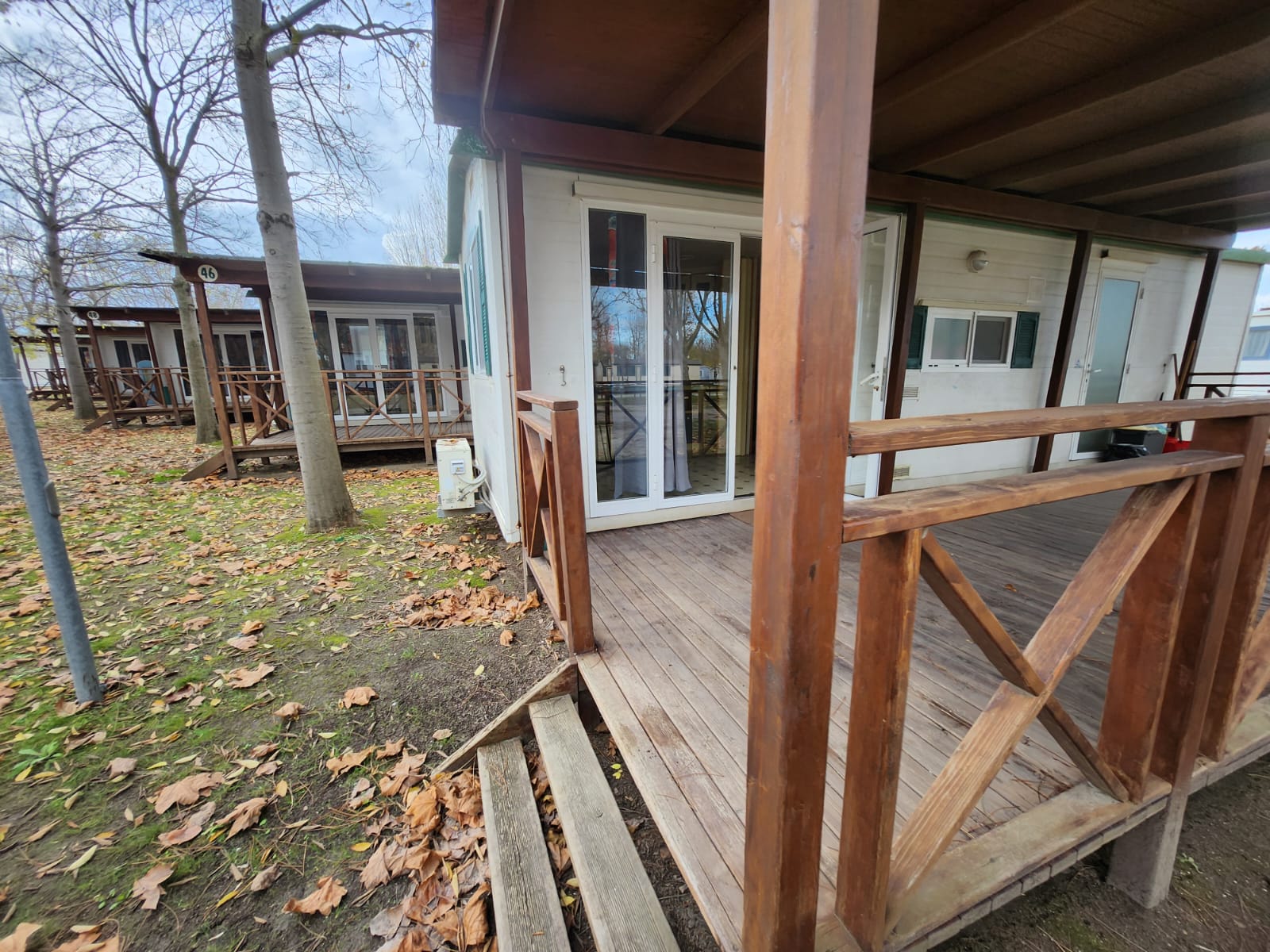
The outdoor tourism industry is entering a new phase. With DPR No. 73/2026, published in the Italian Official Gazette on May 12, 2026, important simplifications have been introduced regarding landscape authorization requirements for campsites, holiday parks and outdoor accommodation facilities.
The most significant change concerns one of the most widespread solutions in outdoor hospitality today: mobile homes.
From May 27, 2026, the placement of mobile homes, caravans and motorhomes within already authorized outdoor tourist accommodation facilities may no longer require a new landscape authorization, provided that specific requirements are met.
This represents an important change for campsites and holiday parks, which will have greater flexibility in managing and upgrading their equipped areas, making it easier to introduce new mobile accommodation solutions.
But what actually changes? And most importantly: does this simplification apply to every mobile home?
DPR 73/2026 updates the previous DPR 31/2017, the regulation that identifies interventions excluded from landscape authorization or subject to simplified procedures.
The purpose of this update is to clarify the relationship between:
The regulation introduces a key distinction:
In practice, the legislation recognizes that a truly removable mobile home installed within an already authorized facility does not represent a permanent transformation of the land.
The simplification introduced by DPR 73/2026 does not apply to every mobile home.
To benefit from the exclusion from landscape authorization, all the requirements established by the regulation must be met.
The mobile home must be installed within:
that already have the required landscape authorization.
The authorization must also cover equipped areas and related utilities, such as:
This means the new regulation does not apply to private land or unauthorized areas.
One of the key aspects of the new regulation is the concept of true removability.
The mobile home must:
Therefore, a structure that is commercially described as a “mobile home” but has been transformed into a permanent building is not considered a mobile solution under the regulation.
The mobile home must not be permanently fixed to the land.
Technical connections are allowed as long as they are:
This means the installation must be possible to dismantle without leaving a permanent transformation of the area.
The new regulation represents an important opportunity for the outdoor hospitality sector.
For many operators, it means greater flexibility in managing spaces and the possibility to:
The simplification reduces administrative complexity and makes it easier to plan investments and quality improvements within already authorized facilities.
For example, a campsite looking to replace older mobile accommodation units with more modern and comfortable models can now benefit from a clearer regulatory framework.
DPR 73/2026 also affects interventions related to equipped campsite areas.
Some changes can now move from the standard procedure to a simplified landscape approval process.
These include:
The main conditions are:
Therefore, this is not a complete deregulation, but rather a faster process for organizational improvements and upgrades.
It is important to clarify that the new regulation does not mean that all mobile homes are automatically exempt from authorization requirements.
DPR 73/2026 does not apply to:
Mobile homes installed on private land
If a mobile home is placed outside an authorized accommodation facility, the standard regulations continue to apply.
Permanent installations
If the structure becomes a permanent building connected to the ground, it does not fall under the simplification rules.
Unauthorized campsites
The regulation only applies to facilities that are already compliant from both planning and landscape perspectives.
The simplification therefore does not regularize existing unauthorized situations.
The mobile home market is growing rapidly thanks to increasing demand for flexible, sustainable and experience-driven accommodation solutions.
DPR 73/2026 moves the sector toward a more modern approach, allowing hospitality operators to invest more easily in:
For campsite and holiday park operators, this change represents an opportunity to better enhance and optimize their available spaces.
For those considering purchasing a mobile home for a tourism facility, it remains essential to verify that the chosen campsite already has the required authorizations.
The new provisions confirm a clear trend: mobile homes are becoming an increasingly strategic solution for outdoor hospitality.
However, understanding regulations is essential to avoid mistakes and choose solutions that are truly suitable for each installation context.
Thanks to its experience in the new and used mobile home sector, 4Springs supports customers and hospitality operators in selecting the right solutions for their needs, offering a wide range of models designed for campsites, holiday parks and outdoor accommodation facilities.
The new regulatory simplifications open up new opportunities: the future of outdoor hospitality will increasingly rely on modern, functional and easily integrated mobile accommodation solutions.

© Copyright 4 Springs Case Mobili s.r.l. 2024
