
Mobile Homes and Hookups: A Practical Guide to a Smooth Installation
- Redazione
- 21/08/2025
Lorem ipsum dolor sit amet
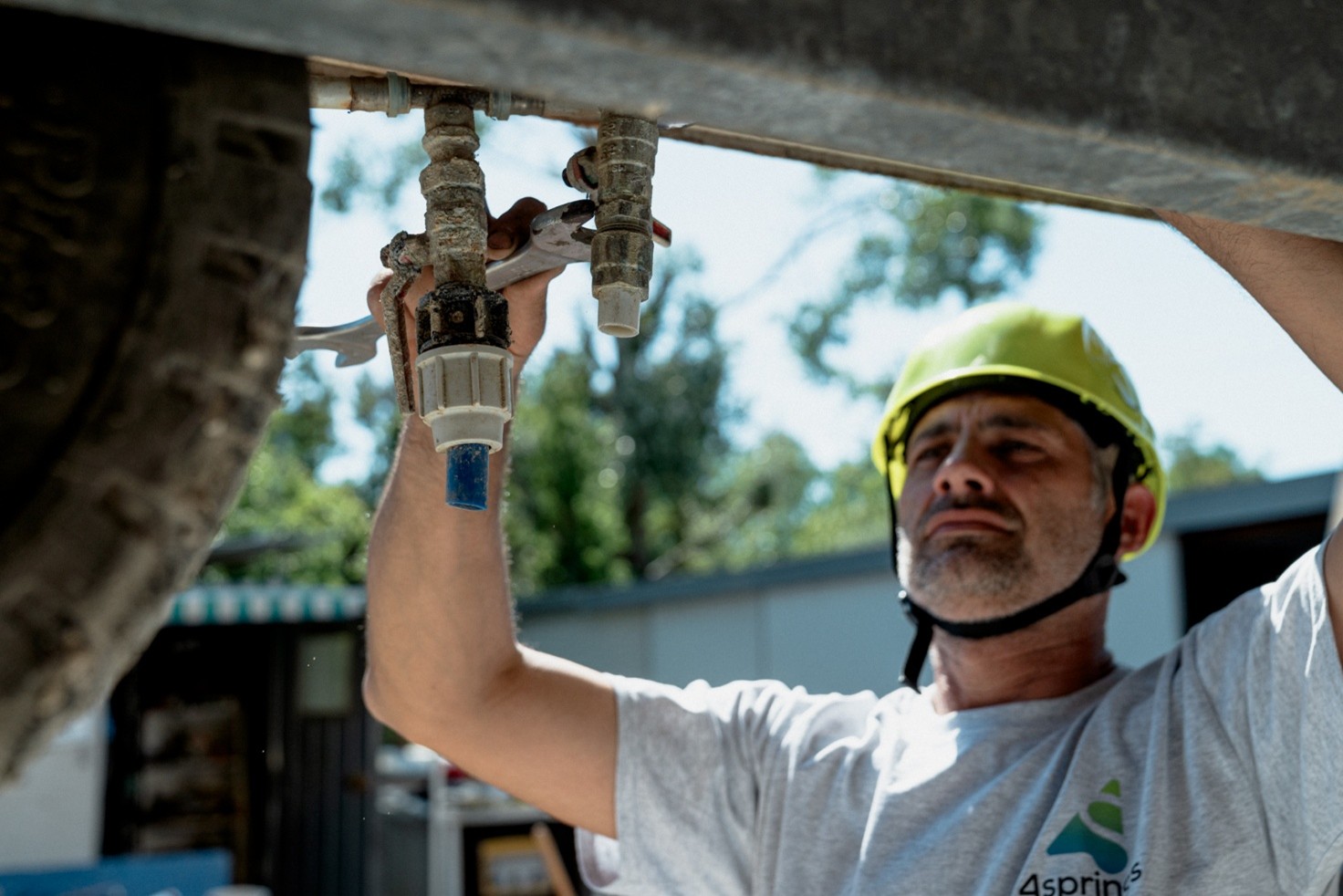
When you buy a mobile home, the first things that come to mind are usually the model, the layout, and the comfort it will provide. But there’s one crucial step that’s often underestimated: proper installation and utility hookups.
In this guide, we’ll break down everything you need to know to make your mobile home fully livable, avoiding unpleasant technical or legal surprises.
Hookups are the functional connections that link your mobile home to essential utilities: electricity, water supply, sewage, and, if required, gas.
Without these, your mobile home is just a shell — not a ready-to-use living space.
Hookups aren’t always complicated, but they do need to be planned carefully and carried out by professionals who understand both the technical specs of mobile homes and the right safety procedures.
The plot of land where you plan to place your mobile home must be accessible to transport vehicles and properly prepared for utility connections.
You don’t need a concrete foundation, but stability and proper leveling are essential.
During the site inspection, factors like ground slope, distance from utility access points, and any obstacles that might hinder installation will be evaluated.
With 4Springs, the entire placement process is handled by a skilled technical team in a coordinated way.
On request, the service can include:
However, 4Springs does not carry out utility hookups directly.
We always recommend relying on certified professionals who can do the job properly and provide guarantees for their work.
If you don’t know who to call, we’ll be happy to suggest trusted craftsmen we’ve successfully worked with in the past.
Please note: the customer must ensure that utility connection points (electricity, water, sewage) are already available on-site.
Otherwise, extra groundwork may be required and needs to be planned separately.
In some cases, connecting utilities is much simpler — for example, if your mobile home is placed inside a campsite or holiday park that already has infrastructure in place, or if you opt for independent solutions like solar panels or mobile water tanks.
Still, for long-term comfort, hooking up to utilities remains the best option.
Installing a mobile home isn’t just about “putting it in place”. It’s about creating the right conditions to live in it safely, comfortably, and for the long run.
A proper installation is the foundation of a truly satisfying living experience.
With 4Springs, you get a full service — from transport to installation to technical support — tailored to your needs.

© Copyright 4 Springs Case Mobili s.r.l. 2024
