
Accessibility in campsites and farm campsites: what regulations provide for people with disabilities
- Redazione
- 09/09/2026
Lorem ipsum dolor sit amet
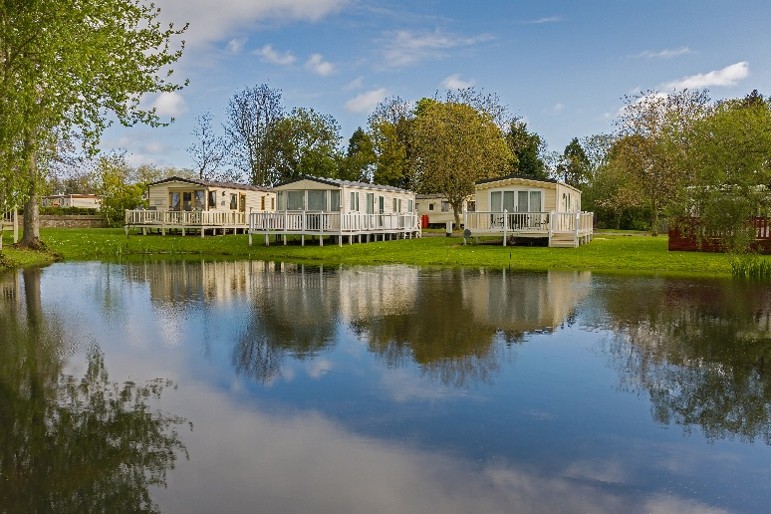
When it comes to accessible tourism, removing architectural barriers is not simply a matter of guest comfort. In Italy, specific regulations establish accessibility requirements for many buildings, spaces and services open to the public, including accommodation facilities.
For campsites, holiday villages and other outdoor accommodation facilities, this means paying attention not only to buildings and common areas, but also to the accommodation units intended for guests.
This is where mobile homes for people with disabilities become particularly important. These units are designed to provide environments that can be used more easily by people with reduced or impaired mobility.
But what exactly does the legislation require? Does a campsite necessarily have to provide accessible accommodation units? How many? And can an accessible mobile home be a suitable solution?
In this guide, we examine the main regulatory references and the key aspects to consider when planning accessible accommodation facilities.
Note: Accessibility regulations may be supplemented by regional and municipal provisions, as well as by specific regulations relating to the type of facility. Before carrying out any work, it is therefore necessary to verify the rules applicable to the individual case with a qualified professional and the competent authorities.
The Italian regulatory framework concerning the removal of architectural barriers is mainly based on Law No. 13/1989, Ministerial Decree No. 236/1989 and, for public buildings, spaces and services, Presidential Decree No. 503/1996.
These provisions are supplemented by Law No. 104/1992, whose Article 24 establishes that construction works involving public and private buildings open to the public, where they may restrict accessibility and visitability, must comply with regulations concerning the removal of architectural barriers.
The key technical reference is Ministerial Decree No. 236/1989, which defines the requirements necessary to ensure accessibility, visitability and adaptability of buildings and spaces.
The regulations take into consideration a number of elements, including:
The objective is not simply to allow a person with a disability to enter a building, but to enable them to use its spaces and services in accordance with the requirements established by law.
Before looking more closely at campsites, it is important to distinguish between three concepts used by Italian accessibility regulations.
Accessibility
Accessibility refers to the possibility for a person with reduced or impaired motor or sensory abilities to reach a building or space, enter it and use its environments and facilities independently and safely.
Visitability
Visitability refers to the possibility of accessing social and communal areas and at least one toilet facility, in accordance with the conditions established by law.
Adaptability
Adaptability refers instead to the possibility of modifying a space or building over time to make it fully accessible, through interventions that comply with the established requirements.
This distinction is also important in the tourism sector: a facility may have different characteristics in terms of accessibility, visitability and adaptability, so these terms should not be treated as synonyms.
One of the most relevant aspects for operators of outdoor accommodation facilities concerns the number of accommodation units that must be accessible.
Ministerial Decree No. 236/1989, under section 5.3, establishes specific requirements for accommodation facilities.
For holiday villages and campsites, the decree requires that, in addition to common services and facilities, at least 5% of the areas intended for temporary accommodation units must be accessible, with an absolute minimum of two units.
This is a particularly important reference for anyone planning, expanding or reorganising an outdoor accommodation facility.
A practical example
Suppose a campsite has 40 units intended for temporary accommodation.
5% of 40 corresponds to 2 units.
In this example, the figure coincides with the absolute minimum established by the regulation.
If, on the other hand, the facility has a greater number of units, the 5% calculation must be made based on the area intended for accommodation units, according to the criteria established by the applicable regulations.
It is therefore important not to interpret the requirement simply as “one accessible mobile home for every 20 mobile homes”: the legislation refers to the areas intended for temporary accommodation units.
When designing or renovating a facility, the calculation and practical application of this requirement must be verified by a qualified professional based on the project and the applicable regulations.
When talking about accessible campsites, it is easy to focus exclusively on the mobile home, bungalow or pitch.
In reality, accessibility concerns the guest’s entire journey through the facility.
A mobile home may be perfectly designed for a wheelchair user, but if reaching it requires following an unsuitable route, the overall accessibility of the solution is compromised.
For this reason, several elements need to be taken into consideration:
Accessibility should therefore be considered as a continuous chain, in which the different elements of the facility must allow people to move around and use the available services in accordance with the requirements established by law.
Mobile homes designed for people with disabilities are accommodation units designed with the needs of people with reduced or impaired mobility in mind.
Compared with a standard mobile home, an accessible solution can be designed with a layout that facilitates movement and the use of the different areas.
Depending on the model and configuration, features may include:
Technical features naturally vary depending on the model. For this reason, when purchasing a mobile home intended for guests with disabilities, it is important to carefully check the configuration and specifications of the individual unit.
For a campsite or holiday village that needs to provide accessible accommodation units, a mobile home for people with disabilities may be a solution worth considering as part of the facility’s overall design.
The advantage is the possibility of providing a unit specifically designed to meet the needs of guests with reduced mobility, rather than having to adapt a standard solution.
This can be particularly interesting for facilities that are:
Naturally, simply having an accessible mobile home does not automatically guarantee that the entire facility complies with accessibility requirements.
The connection between the unit and common areas, access points, routes and all other elements required by law must also be taken into consideration.
The term farm campsite is often used to describe camping and outdoor accommodation areas connected to an agritourism business.
From a regulatory perspective, however, it is important not to assume that all farm campsites are subject to exactly the same rules as campsites or holiday villages.
Agritourism activities are also governed by regional legislation, which may establish specific requirements concerning:
For this reason, when discussing accessibility at farm campsites, it is necessary to distinguish between the general principles established by national legislation concerning the removal of architectural barriers and the specific provisions applicable in the individual region and to the specific type of facility.
This aspect is particularly important when considering the purchase of a mobile home.
The fact that a mobile home is designed to be accessible does not automatically mean that it can be installed in any area or accommodation facility.
Before purchasing and installing a unit, it is therefore advisable to verify:
Carrying out these checks in advance is particularly important because the accessibility requirements of the accommodation unit and the possibility of installing that same unit in a specific area are two separate issues.
There is no single feature that automatically makes a mobile home “accessible”.
The assessment must be carried out by considering the applicable regulatory requirements and the overall configuration of both the unit and the facility in which it will be installed.
From a design perspective, however, some elements are particularly important.
Entrance
The entrance must allow people to enter and leave the unit safely, taking into account the needs of people with reduced mobility.
Doors and passageways
The width of passageways must be compatible with mobility requirements and with the use of aids such as wheelchairs.
Manoeuvring spaces
The rooms must be organised taking into account the space required to move around, change direction and reach the different elements within the accommodation.
Accessible bathroom
The bathroom is one of the most important areas.
Access, manoeuvring spaces, the positioning of sanitary fixtures, the shower and any other aids must be assessed.
Bedroom
The bedroom must also allow guests to reach the bed and move easily between the main elements of the room.
Kitchen
The kitchen layout should be designed taking into account the needs of people with reduced mobility.
Outdoor access route
The accessibility of the mobile home must be connected to the accessibility of the surrounding outdoor route.
An entrance that has been correctly designed loses much of its effectiveness if the unit can only be reached via an unsuitable route.
Accessibility should not be viewed solely as a legal obligation.
For an accommodation facility, it is also an opportunity to improve the quality of its offering and reach a wider audience.
A facility that genuinely prioritises accessibility can clearly communicate:
This last point is particularly important.
Simply describing a facility as an “accessible campsite” may in fact be of limited value to someone planning a holiday.
For a person with a disability, it is much more important to know how the facility is accessible and what specific features they can expect.
Detailed and transparent communication can therefore help build greater trust even before the booking is made.
For campsites, holiday villages and industry operators looking to expand their offering with solutions dedicated to accessible tourism, 4Springs offers mobile homes designed for people with disabilities.
These units are designed with the needs of people with reduced mobility in mind and may represent a solution to consider as part of an accommodation project that includes accessible temporary accommodation units.
The most suitable mobile home should be selected by considering several factors: the number of guests, the layout of the spaces, the characteristics of the installation area, the services available and the applicable regulatory requirements.
For this reason, before purchasing and installing a mobile home, it is always advisable to verify that the chosen solution is compatible with the facility’s overall project.
Accessibility is an important factor in the design and management of accommodation facilities.
For campsites and holiday villages, Ministerial Decree No. 236/1989 establishes specific requirements for units intended for temporary accommodation, providing that at least 5% of the relevant areas, with a minimum of two units, must be accessible.
However, designing a truly accessible facility means going beyond simply meeting the required number of units.
The guest’s entire journey must be considered, from access points and parking areas to routes and common areas, right through to the mobile home or other accommodation solution.
In this context, mobile homes designed for people with disabilities can provide a practical solution for campsites and holiday villages wishing to offer accommodation units designed to be more easily used by people with reduced mobility.
4Springs offers mobile homes designed for people with disabilities for the accommodation sector, giving operators the opportunity to consider dedicated solutions as part of their accessible tourism projects.
Before purchasing and installing a mobile home, however, it is essential to verify the regulations applicable to the specific facility and installation area, involving qualified professionals and the relevant authorities.
Would you like to expand your facility’s offering with a mobile home designed for people with disabilities? Discover 4Springs solutions for accessible tourism.

© Copyright 4 Springs Case Mobili s.r.l. 2024
